
I build design systems designers trust and engineers want to use.
Twelve years in front-end, the last six building and scaling FICO's IRIS design system. I work where Figma meets the codebase: tokens, theming, accessibility, and now AI tooling that writes on-system UI.
From front-end developer to design systems engineer
- 2014
Front-end at Dillard's
Shared Angular component libraries and CSS-variable theming, before "design system" was in my title.
- 2020
Built IRIS
Joined FICO as Lead UI Engineer and built the design system from scratch on the Angular CDK.
- 2022
Scaled it
As Senior UI Engineer, grew IRIS to 50 dependent domains across legacy and modern platforms.
- 2023
Proved it
Led the rewrite of Falcon Fraud, a $250M product, using nothing but IRIS components.
- Now
AI for design systems
Agent skills that turn requirements and Figma mocks into on-system code.
IRIS, FICO's design system
I started IRIS in 2020 with one or two teams using it. Today 50 domains across FICO's legacy and modern platforms depend on it, and marketing and product share one token language. I've built more than 90 components for it, in both the core design system library and the platform.
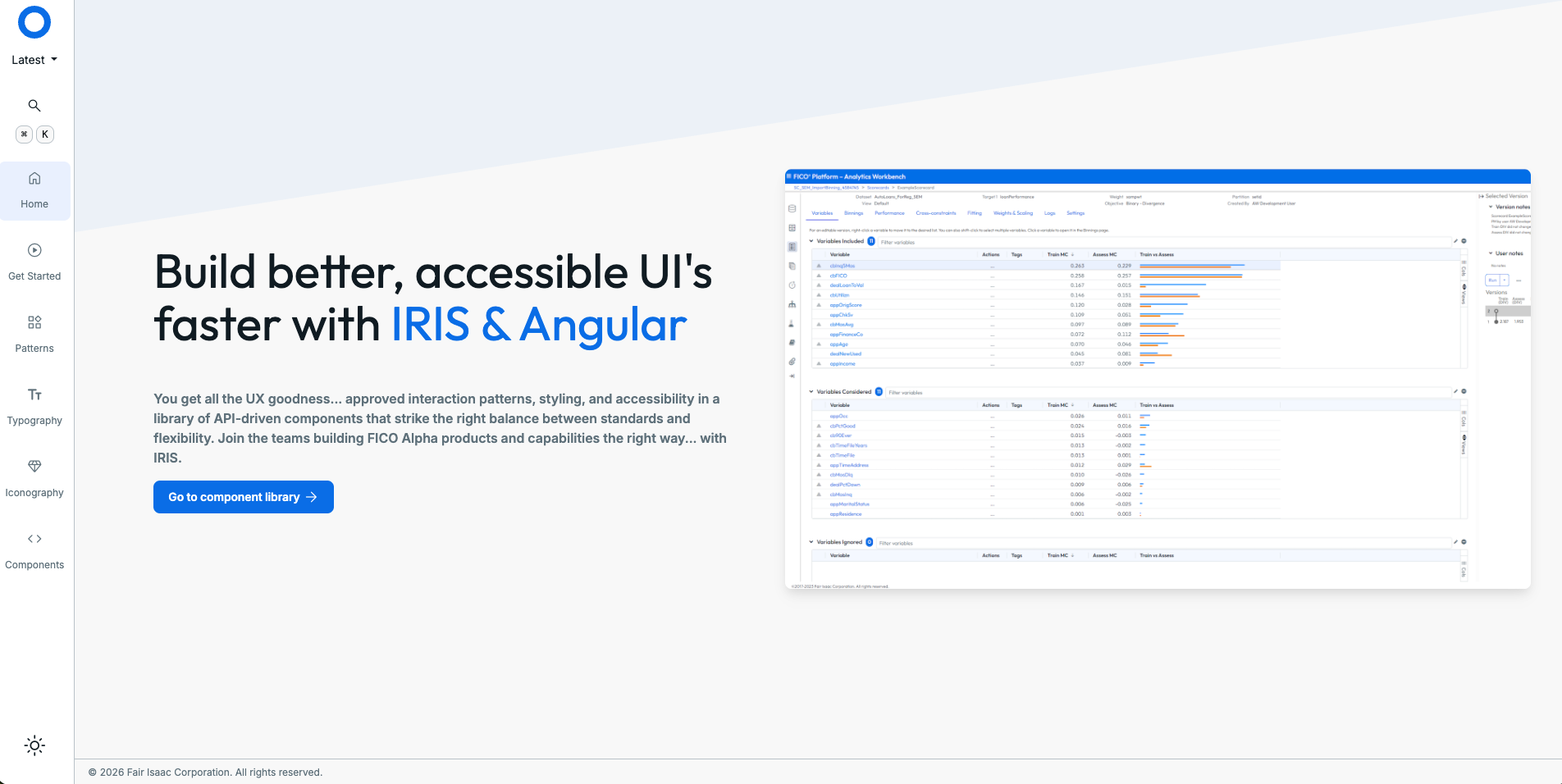
Components built
Across the core IRIS library and the platform layer built on top of it, covering everything from basic controls to full application patterns.
Teams to dependent domains
Adoption grew through weekly office hours, live StackBlitz examples, release notes in the shared Teams channel, and hands-on help with Angular upgrades.
Falcon Fraud, rebuilt on IRIS
In 2023 we led the rewrite of Falcon Fraud and built it entirely from IRIS components. Dogfooding the system on a flagship product proved it could carry a full modern application.
Theming
Light and dark themes ship today, with light-alt and dark-alt built into the token library and ready to turn on. The switcher at the top of this page shows the idea.
Accessibility
We partnered with an accessibility consultancy on a WCAG AA audit and remediated every component. Building on the Angular CDK gave us full control over behavior and focus.
Beyond Angular
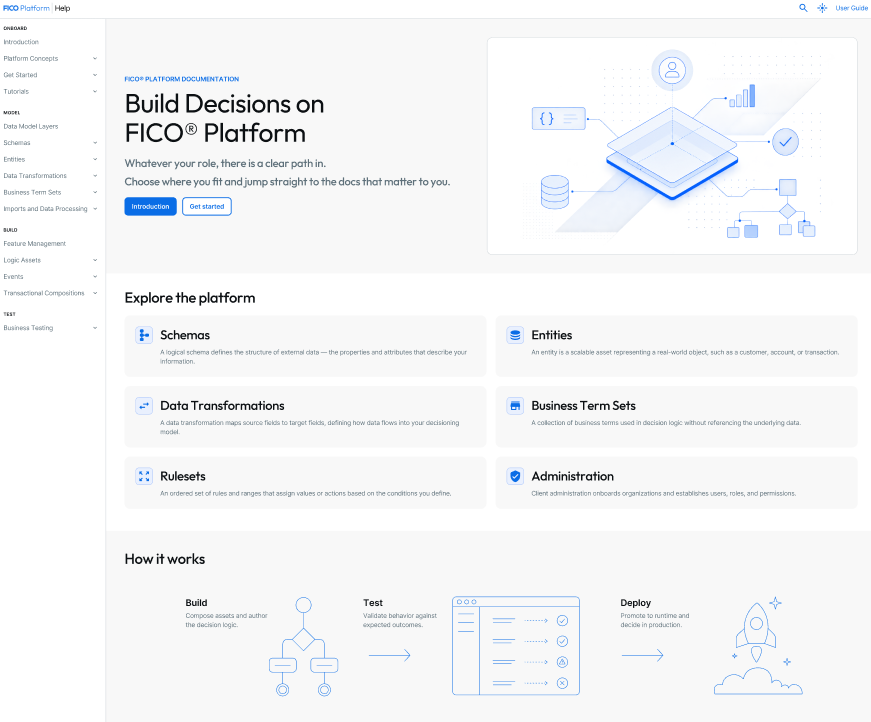
Semantic tokens and SCSS utilities for spacing, surfaces, typography, and icons let non-Angular teams match the IRIS look and feel.
Docs and quality
A documentation site with ephemeral StackBlitz examples, a Playwright test harness, semantic versioning, and release logs keep 50 domains confident in every update.
Tokens from Figma to production
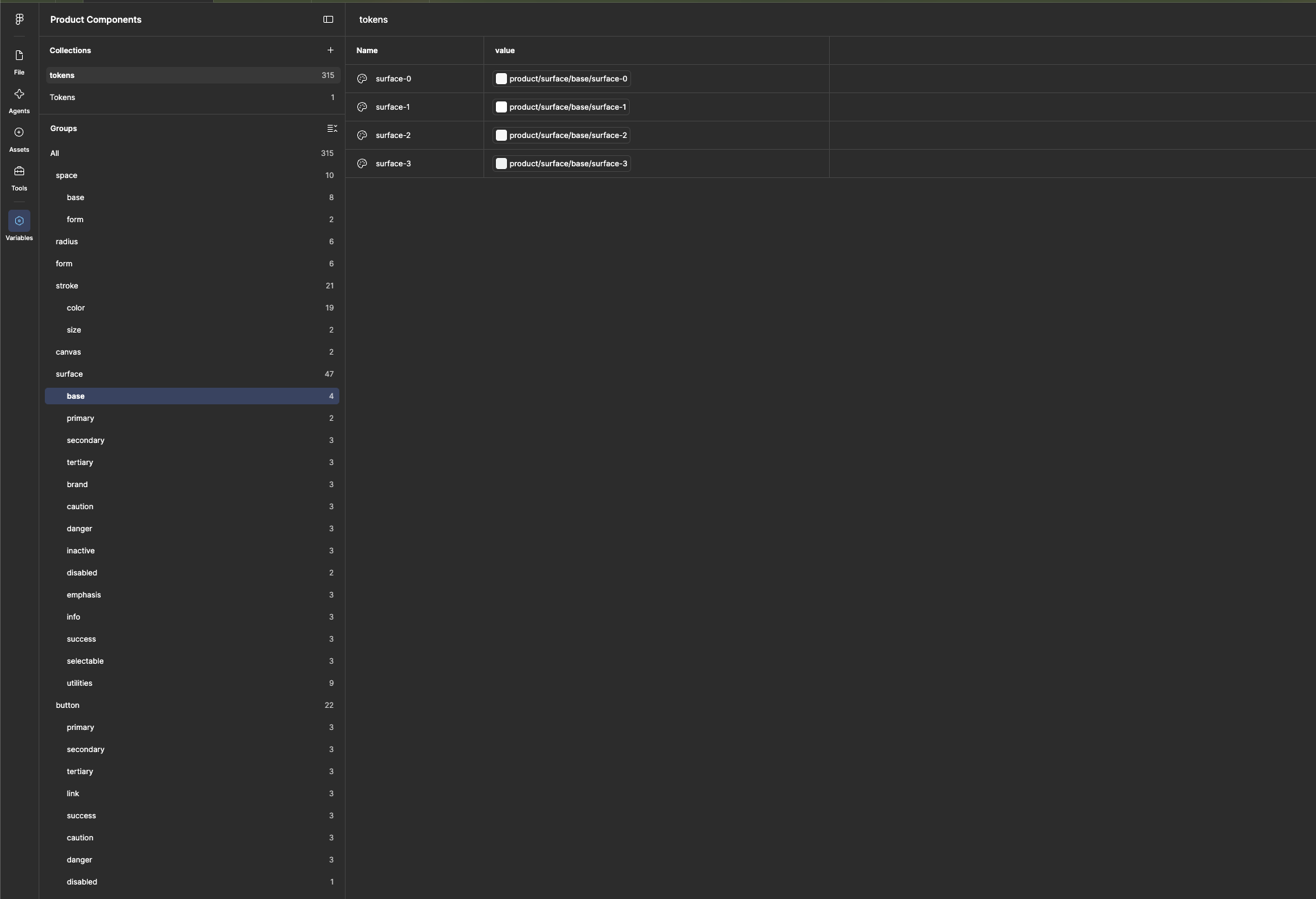
We defined one token naming strategy across marketing and product, then automated the handoff. A theme change that used to need developer time now ships by running one GitHub Action.
- FigmaTokens defined by design
- Figma APITokens pulled automatically
- GitHub ActionBuild runs on demand
- CSS custom propertiesPublished in the library
- IRIS componentsEvery app updates
AI that writes on-system UI
When AI writes UI, it should write your UI.
Over the last few years I've focused on making IRIS something AI tools can use correctly, not just something people can.
- Requirements to working features
- An agent skill that turns a product requirements document into a working Angular feature, with validated plans, IRIS generators, mock data, and scripted quality gates.
- Token-based prototyping
- A skill that builds framework-free HTML prototypes from IRIS tokens, so ideas look like the real product from the first draft.
- Wireframes agents can read
- A shared wireframe system with a fixed grid, a signature for each IRIS component, and full-page templates that other skills build on.
- Figma MCP prototyping
- Prototypes generated straight from design mocks, shortening the path from design to working UI.
- Code review on every PR
- An AI review agent runs when a pull request opens, keeping quality consistent across contributors.
- Teaching the team
- I mentor our junior engineers on best practices, code review, and working effectively with AI.
More work beyond design systems
Before and alongside IRIS, I've designed, built and shipped products end to end.
Experience
Senior UI Engineer, Design Systems
Scaled IRIS to 50 domains, led the Falcon Fraud rewrite, built the token pipeline and theming, ran the WCAG AA audit, brought AI into our workflow, and lead the team's junior engineers.
Lead UI Engineer, Design Systems
Built IRIS from scratch, defined the token naming strategy, set up the Nx monorepo and a Module Federation micro-frontend reference, and drove early adoption.
Front-end Developer / UX Designer
Designed and built internal and customer-facing apps, migrated the e-commerce CMS to Angular, built shared component libraries, and taught JavaScript and Angular classes.
BBA in Management Information Systems, Cum Laude
Speaking

Shake Up Your Design System
Co-hosted a virtual mixology class and panel discussion for design system leaders with Joshua Godi of Netflix.
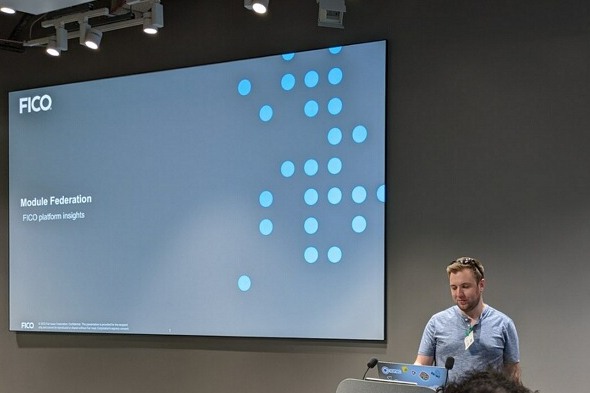
Micro-frontends and Module Federation
Presented FICO's micro-frontend approach to the Angular core team and enterprise Angular developers.
What I work with
Design systems
Figma and the Figma API, design tokens, theming, component documentation, WCAG AA
Engineering
Angular and the Angular CDK, TypeScript, JavaScript, CSS and SCSS, Nx, Playwright, Cypress, GitHub Actions
AI
Agent skills, Figma MCP, AI code review, AI-assisted development
Let's talk about design systems.
Tokens, theming, accessibility, or getting AI to build with your components. I'm always happy to compare notes.